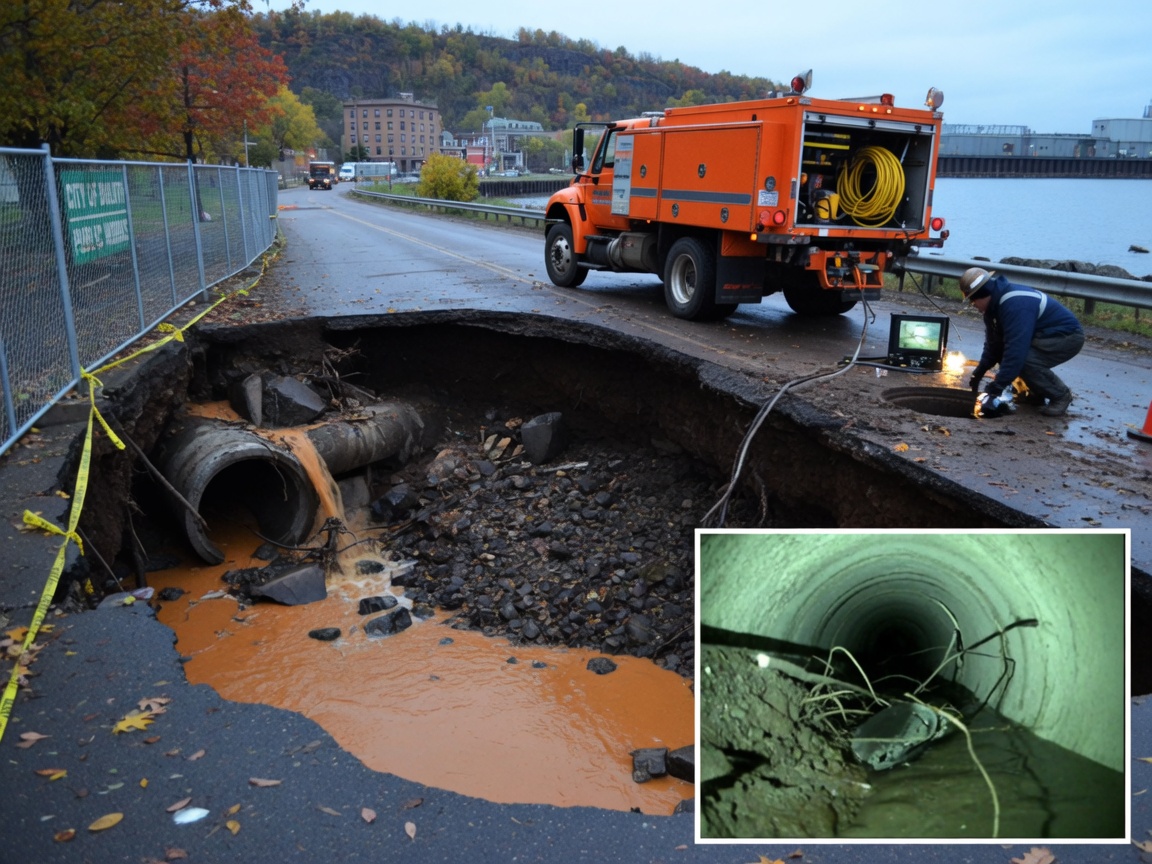
Irving sits on the west side of Duluth with 1910s-1950s homes that still carry clay laterals and cast-iron stacks. These lines settle on the slopes above Spirit Valley and pick up roots from the mature trees that line the narrow lots. Freeze-thaw cycles push frost deeper into the ground during light-snow winters, then snowmelt and rain send extra water into the sanitary system through cracks and joints.
When backups hit Irving, they often show up after a thaw or heavy rain because inflow and infiltration from the hillsides overloads the mains that run toward the 53 city lift stations. After Hours answers calls around the clock for these exact conditions, bringing camera inspection and hydro-jetting straight to the neighborhood instead of waiting for regular business hours.
Access in Irving means working around tight driveways and older garages, so crews stage equipment on the street and run hoses to the cleanout without tearing up the small yards. The same pattern repeats in nearby Lincoln Park and Denfeld where mill-era housing shares the same pipe materials and slope issues.
Around Irving
We regularly work near:
- 📍Lincoln Park
- 📍Spirit Valley
- 📍Denfeld neighborhood
- 📍Grand Avenue
- 📍Miller Creek
Drain Cleaning in Irving — Local Notes
- •Hillside clay laterals in Irving settle and crack from frost heave, letting roots and I/I enter the same way they do in Lincoln Park and Denfeld.
- •Older mill housing stock means cast-iron stacks that split during deep freezes, especially on the steeper lots above Spirit Valley.
- •Snowmelt from the hillsides funnels extra water into the sanitary system after light-snow winters, exactly as seen on the 1880s mains near W Superior St and Mesaba Ave.
- •Tight lots and narrow streets require equipment staged on the road so hydro-jetting reaches the cleanout without blocking neighbors.