2026-08-26 · Dave Larson
Light Snow and Frozen Ground: Why Duluth Water Mains Fail in Winter
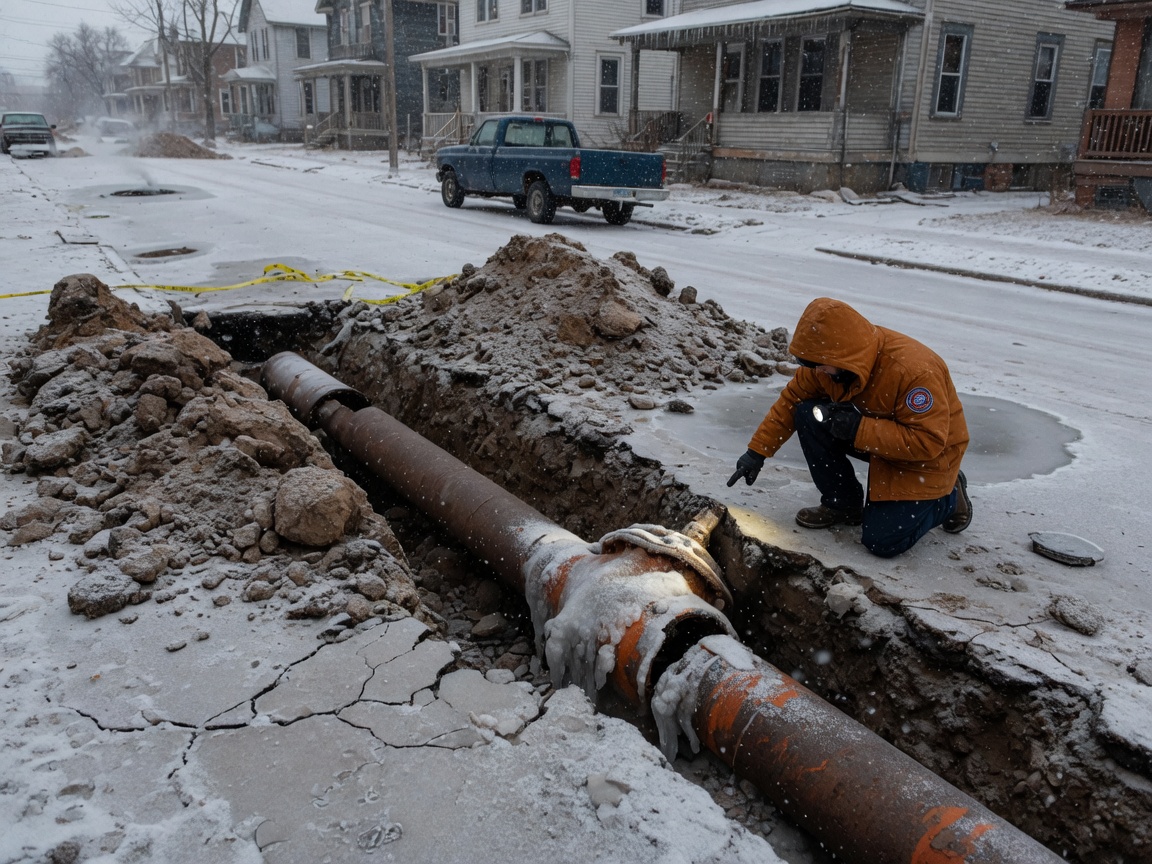
Light snow winters allow frost to reach greater depths around Duluth's old cast-iron mains, and traffic pounding the frozen ground then splits pipes that have already been stressed by repeated freeze-thaw cycles. WDIO reports roughly 100 water-main breaks each year in the city, with the January 2025 split at W Superior St and Mesaba Ave serving as a clear example of how shallow snow cover fails to insulate the ground.
How Light Snow Changes Frost Depth in St. Louis County
Duluth's Lake Superior climate normally brings steady snow that insulates the ground, but the last two winters produced only light snow according to the statement Mayor Reinert shared with Fox 21. Without that insulating blanket, frost penetrated deeper into clay soils and around 1880s cast-iron mains. The result is greater pressure on pipes already weakened by age and settlement. Neighborhoods built on hillsides such as Central Hillside, East Hillside, and Lincoln Park see the effect first because their laterals sit at steeper angles and experience more movement during thaw. The same pattern reaches nearby cities including Hermantown, Proctor, and Superior WI where crews respond to similar breaks after light-snow winters.
Traffic Loads on Frozen Ground and 1880s Cast Iron
Once frost reaches the depth of old mains, vehicle weight transmits directly into the pipe wall. The Fox 21 report quoted Mayor Reinert noting that light snow the last two winters let frost go deeper; traffic pounding frozen ground then splits old mains through winter and spring. This explains why breaks cluster along routes like W Superior St and why the city water emergency line at 218-730-4000 receives increased calls each spring. In Denfeld, Oneota, and Spirit Valley the same traffic-plus-frost combination stresses private laterals that were installed with clay or early cast iron. When those laterals crack, groundwater and snowmelt enter the sanitary system, adding to the inflow and infiltration load already handled by the city's 53 lift stations.
Connection to Private Laterals and Sewer Backup Risks
The same conditions that break city mains also damage the clay and cast-iron laterals serving 1910s–1950s homes in Lincoln Park, Endion, and Lakeside-Lester Park. When frost heaves the ground, joints separate and roots exploit the openings. After thaw and heavy rain, I/I surges push backups into basements, especially on the west side in Fairmount and Denfeld. A sewer camera inspection reveals these defects before they cause an emergency. Homeowners in Congdon Park and Hunter's Park who schedule inspections after light-snow winters often find settlement cracks that would otherwise go unnoticed until the next thaw cycle.
Practical Steps After a Main Break or Lateral Failure
When a main breaks nearby, shut off water at the curb stop if safe, document visible damage, and contact the city. For private laterals the next step is a camera inspection to locate roots, cracks, or offsets before they allow sewage to back up. The article Frozen Pipes Flooded a Lakeside Daycare — What Duluth Homes Should Do After a Burst outlines the sequence many Lakeside-Lester Park and Endion residents follow. After any thaw event, checking cleanouts in the basement and yard helps catch early signs of I/I before grease and roots turn a small problem into a full sewer backup.
After Hours Sewer & Drain Cleaning provides 24/7 emergency drain and sewer service across Duluth and nearby cities including Cloquet and Two Harbors. Call (218) 505-8183 for help with frozen laterals or post-thaw backups.