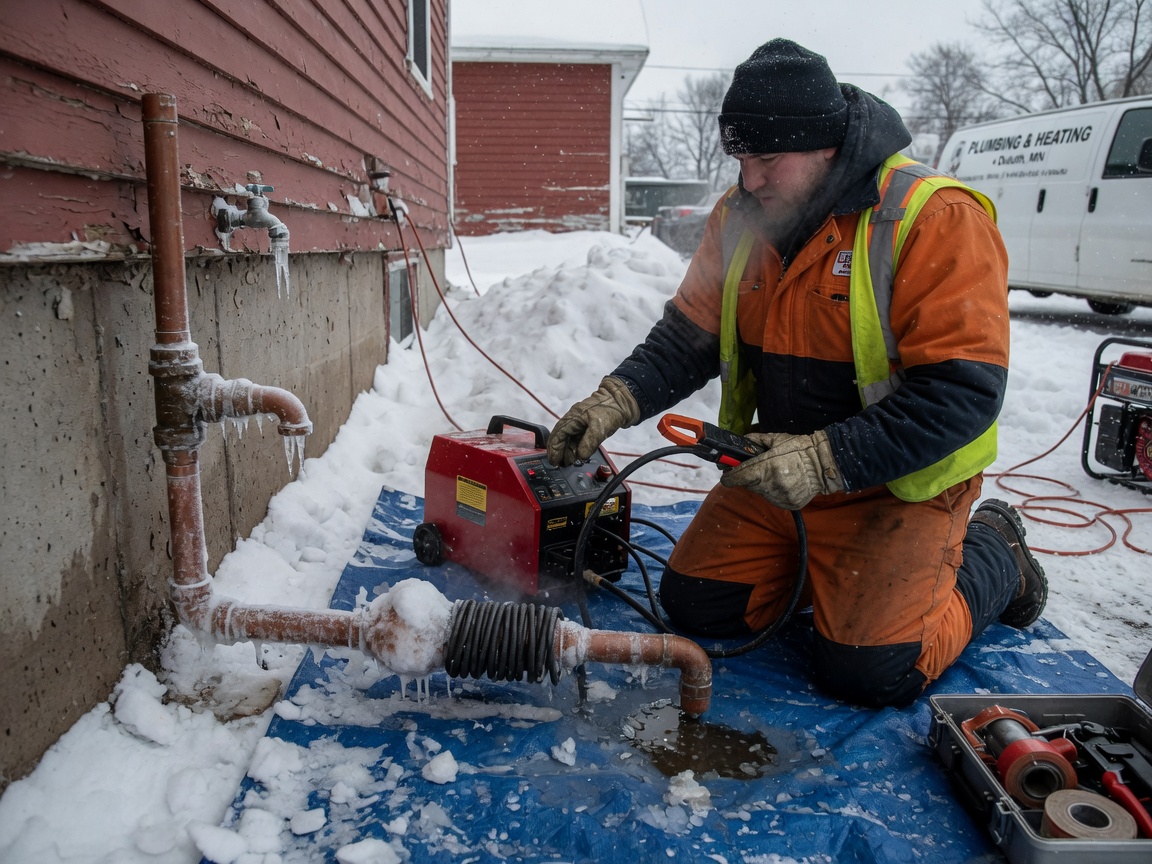
Duluth winters moderated by Lake Superior still drive temperatures low enough to freeze supply and drain lines in older housing stock common in neighborhoods like Denfeld and Morgan Park. Cast iron and galvanized lines in pre-1950 homes lose heat fast when wind sweeps across the hills, and once ice forms the pressure can split joints before homeowners notice reduced flow. Technicians start with infrared location to avoid opening walls unnecessarily, then apply controlled heat tapes or steam rather than open flame near knob-and-tube wiring still found in Central Hillside and Piedmont Heights.
Lake-effect snow and rapid temperature swings create edge cases where exterior hose bibs on Park Point and Lakeside properties freeze first, sending ice back into interior lines. Main sewer laterals running under shallow frost lines near the Aerial Lift Bridge corridor are especially vulnerable because soil stays saturated. Crews carry dielectric unions and replacement sections sized for the era of the home to restore service without triggering code issues on older galvanized runs. Access through crawl spaces in Endion and East Hillside often requires temporary floor protection because of the fine clay soils that track in easily.
After thawing, flow testing includes both hot and cold lines plus nearby floor drains to confirm no secondary ice remains in low spots. Homeowners in Lincoln Park and Superior who wait until multiple fixtures stop working usually face longer recovery times because the freeze has already reached the main stack. Technicians document pipe condition and recommend insulation upgrades at the most exposed sections before leaving the site.
Technician insight
In Duluth the thing that catches most people out with frozen pipe thawing is how fast ice travels in the old galvanized mains that run along the north side of homes in Lincoln Park and Denfeld; once the wind picks up off Lake Superior those lines lose heat before the rest of the house and the homeowner only notices when the toilet stops refilling.
West Duluth main line freeze
A homeowner in West Duluth reported no water at multiple fixtures after two nights below zero. The crew found the freeze at the galvanized service entry under the uninsulated porch. Controlled steam was applied from the basement cleanout outward while monitoring wall temperature. Flow returned to all fixtures within ninety minutes and the line was insulated before departure.
Frozen Pipe Thawing Services We Offer
✓Kitchen Supply Line Thawing
Restores flow to sinks in older Duluth homes where galvanized lines run along unheated exterior walls common in West Duluth and Denfeld.
✓Bathroom Drain Thawing
Clears ice from tub and shower drains that back up when temperatures drop overnight in hillside neighborhoods like East Hillside and Piedmont Heights.
✓Main Water Line Thawing
Addresses full-home freezes in pre-war housing stock throughout Lincoln Park and Central Hillside where the service line enters near the foundation.
✓Exterior Hose Bib and Sillcock Thawing
Opens frozen outdoor spigots on Lake Superior properties in Lakeside and Park Point before ice travels back into interior supply lines.
✓Sewer Lateral Thawing
Targets slow or blocked sewer laterals in Morgan Park and Endion where shallow burial and clay soils allow frost to reach the pipe.
Frozen Pipe Thawing Cost in Duluth, MN
| Service | Typical Range | What Affects It |
|---|---|---|
| Single fixture supply line thaw | $175–$350 | Price rises with wall access or multiple bends in older galvanized runs. |
| Main water line thaw | $300–$650 | Higher when the freeze is under the foundation or in crawl spaces common in hillside homes. |
| Sewer lateral thaw | $400–$800 | Varies with depth, location in yard, and whether camera inspection is needed first. |
Ranges are typical for Duluth, MN and confirmed with an exact written quote before any work starts.
How it works
- 1
Locate The Freeze
Technicians use infrared imaging and listening devices to pinpoint the ice plug without unnecessary wall or ceiling removal in older Duluth homes.
- 2
Apply Controlled Heat
Steam or electric heat tape is applied gradually while monitoring pipe temperature to avoid steam pressure or thermal shock on aged materials.
- 3
Restore And Test Flow
Water is reintroduced slowly, then fixtures and nearby drains are checked to confirm complete thawing and no secondary blockages remain.
- 4
Document And Insulate
Condition of the line is noted and exposed sections receive added insulation recommendations suited to St. Louis County winters.
Pricing
Upfront quotes based on number of lines, access difficulty, and whether excavation is required.