2026-08-27 ·
Frozen Drains and Sewer Lines: A Duluth Winter Survival Guide
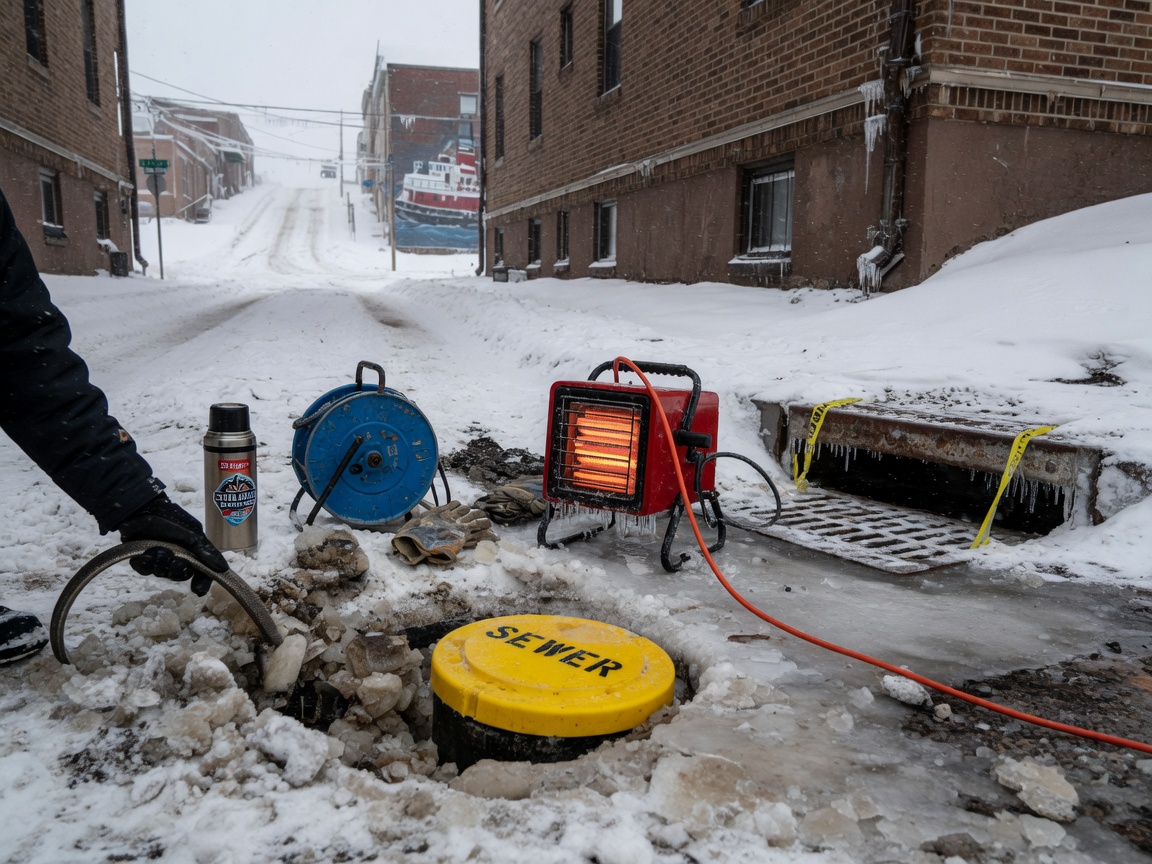
Duluth winters moderated by Lake Superior often freeze drains and sewer lines in older homes across St. Louis County neighborhoods such as Lincoln Park and Central Hillside, and professional emergency drain cleaning or pipe thawing typically resolves the issue within a few hours when temperatures stay below freezing for days.
Why Lake Superior Winters Freeze Pipes in Duluth Homes
Duluth's cold snowy winters with cool summers create repeated freeze-thaw cycles that affect older housing stock in East Hillside and West Duluth. Homes built decades ago often have pipes running through unheated crawl spaces or shallow trenches where soil stays saturated near Lake Superior. Snow accumulation insulates the ground unevenly, allowing frost to penetrate deeper along slopes in Piedmont Heights and Morgan Park. These conditions turn standing water in low spots into ice plugs that block flow from basement fixtures. Residents in Park Point and Endion see similar problems when wind off the lake drives temperatures lower than inland spots. The pattern repeats most years once sustained cold arrives, making early attention to exposed lines essential before full blockages form.
Signs of Frozen Drains and Sewer Lines in St. Louis County
Slow drainage from multiple fixtures signals ice forming inside lines, especially after nights below zero in neighborhoods like Denfeld and Lakeside. Gurgling sounds from toilets or floor drains indicate air trapped behind an ice blockage rather than a simple clog. In Central Hillside homes, backups may appear first in lower-level baths when sewer lines under the street freeze at shallow depths. Ice can also expand and crack older clay sections common in Duluth, leading to leaks once thawing begins. Homeowners notice these issues most after heavy snow followed by a sharp drop, as meltwater refreezes overnight. Checking accessible cleanouts before the coldest stretches helps catch problems early in areas such as Morgan Park.
Preventing Frozen Lines Before They Form
Insulate exposed pipes in basements and crawl spaces with foam sleeves rated for below-zero temperatures common in Duluth. Keep a slow trickle from faucets on the coldest nights to maintain flow through vulnerable sections in Lincoln Park and East Hillside homes. Clear snow from cleanout locations so access remains possible if emergency drain cleaning becomes necessary. In West Duluth and Piedmont Heights, where terrain slopes toward Lake Superior, ensure downspouts direct water away from foundation walls to reduce soil saturation around sewer lines. Scheduling a sewer camera inspection before winter helps identify weak spots in aging lines that ice will exploit. These steps reduce the chance of complete blockages during extended cold snaps.
Handling a Freeze and When Professional Help Is Needed
If a drain stops completely, avoid chemical products that can damage older pipes still common in St. Louis County. Apply gentle heat with a hair dryer or heat tape to accessible sections rather than open flame. Persistent ice deeper in the line requires frozen pipe thawing equipment that reaches blockages without excavation. For sewer lines, camera inspection often reveals whether the freeze sits inside the home or under the street in places like Canal Park. When backups reach living spaces or multiple homes on the block are affected, 24/7 service prevents further damage. After thawing, a follow-up sewer line repair may be needed if ice has stressed joints. Duluth residents also benefit from reviewing the Spring Snowmelt and Basement Drain Backups in Duluth: 2026 Prep Guide to plan for the next seasonal shift.