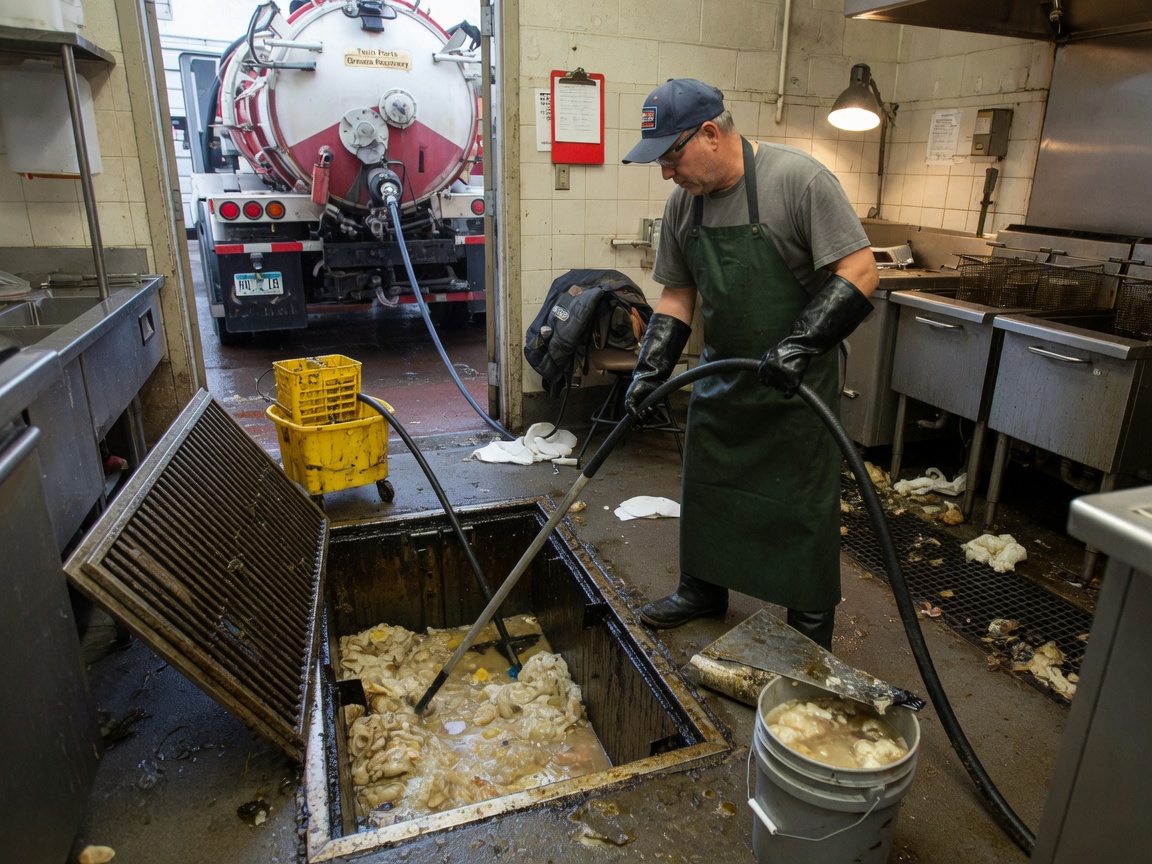
Duluth's older housing stock in neighborhoods like Denfeld, Morgan Park and Central Hillside often has concrete grease traps installed decades ago that trap fats, oils and grease from kitchen lines before they reach the city sewer. Lake Superior's cool summers keep indoor temperatures moderate, but once winter temperatures drop, grease solidifies faster in traps and downstream lines, turning minor buildup into complete blockages that back up into basements or restaurant floors. We pump and scrape these traps by hand or with hydro-jetting equipment sized for the access points common in St. Louis County buildings, then flush the lines to Superior and Duluth main sewers.
Commercial kitchens near Canal Park and the Duluth Entertainment Convention Center see heavy seasonal loads from tourism that accelerate trap filling. In these cases we schedule quarterly or semi-annual service to stay ahead of city inspection requirements while avoiding the emergency calls that spike after holiday weekends. Residential properties in Lakeside and Piedmont Heights with newer plastic interceptors still need periodic cleaning because Lake Superior's high water table can push groundwater into older clay laterals, mixing with grease and creating stubborn clogs that standard drain snakes cannot clear.
We always check for proper trap sizing and venting during every visit because undersized units in Endion and East Hillside homes frequently overflow during large family gatherings. Cold-weather access often means working through snow-covered lids in West Duluth alleys, so we carry heated tools and extra lighting to complete jobs without damaging surrounding concrete or landscaping.
Technician insight
In Duluth the thing that catches most people out with grease trap cleaning is how fast the cold Lake Superior water makes grease set up hard inside the trap and the first ten feet of outlet pipe; a trap that looked fine in September can be rock-solid by January, especially in the unheated crawl spaces common in Lincoln Park and Denfeld homes.
Overflow at a West Duluth restaurant during a cold snap
A small kitchen on Grand Avenue called after lunch service when floor drains backed up. We found the concrete trap half full of solidified grease that had frozen overnight. After pumping and jetting the line to the alley sewer we restored flow before dinner rush with no further backups reported that week.
Grease Trap Cleaning Services We Offer
✓Commercial Grease Trap Pumping
Scheduled or emergency pumping of restaurant and food-service traps in high-traffic zones like Canal Park and the DECC to prevent FOG backups into prep areas.
✓Residential Grease Interceptor Cleaning
Full removal and cleaning of under-sink or in-ground interceptors in older Duluth homes in Lincoln Park and Denfeld where kitchen lines tie into aging clay sewers.
✓Kitchen Drain Line Jetting
Hydro-jetting of grease-coated branch lines from the trap to the street connection, effective in Park Point cottages and Lakeside properties where roots and grease combine.
✓FOG Inspection and Reporting
Visual and camera inspection of trap condition with written notes for property owners needing documentation for St. Louis County health or building inspections.
✓Emergency Grease Trap Unclogging
After-hours response when traps overflow into basements or floor drains, common during winter freezes in West Duluth and Central Hillside multi-family buildings.
Grease Trap Cleaning Cost in Duluth, MN
| Service | Typical Range | What Affects It |
|---|---|---|
| Residential trap pumping | $250–$550 | Varies with trap size and depth; older concrete units in West Duluth cost more to access. |
| Commercial trap pumping | $400–$900 | Larger units near Canal Park or multiple baffles increase time on site. |
| Kitchen line jetting add-on | $300–$700 | Required when grease has migrated past the trap into laterals. |
| After-hours emergency call | $150–$300 premium | Added to base service for 24/7 response in snow or freezing conditions. |
Ranges are typical for Duluth, MN and confirmed with an exact written quote before any work starts.
How it works
- 1
Site Assessment
Locate the trap, measure access, and check for signs of overflow or vent issues while noting nearby Lake Superior-influenced water table conditions.
- 2
Pumping and Removal
Pump out accumulated grease and solids, then scrape walls and baffles to restore full capacity without damaging older concrete units common in Duluth.
- 3
Line Flushing
Jet the outlet line to the main sewer to clear any downstream grease that has already migrated toward the street connection.
- 4
Final Inspection
Run water through the system, verify flow, and document trap condition for the property owner before leaving the site.
Pricing
Most residential grease trap jobs in Duluth fall between a few hundred dollars and low four figures depending on trap size, access difficulty, and whether line jetting is required.